
Originally published 2026-11-11 · VWU.AI
Waymo’s Winter Preparations and the Limits of Visual Datasets
Define what a visual dataset supports, how to label indeterminate observations, and how to validate boundary cases on independent real footage.
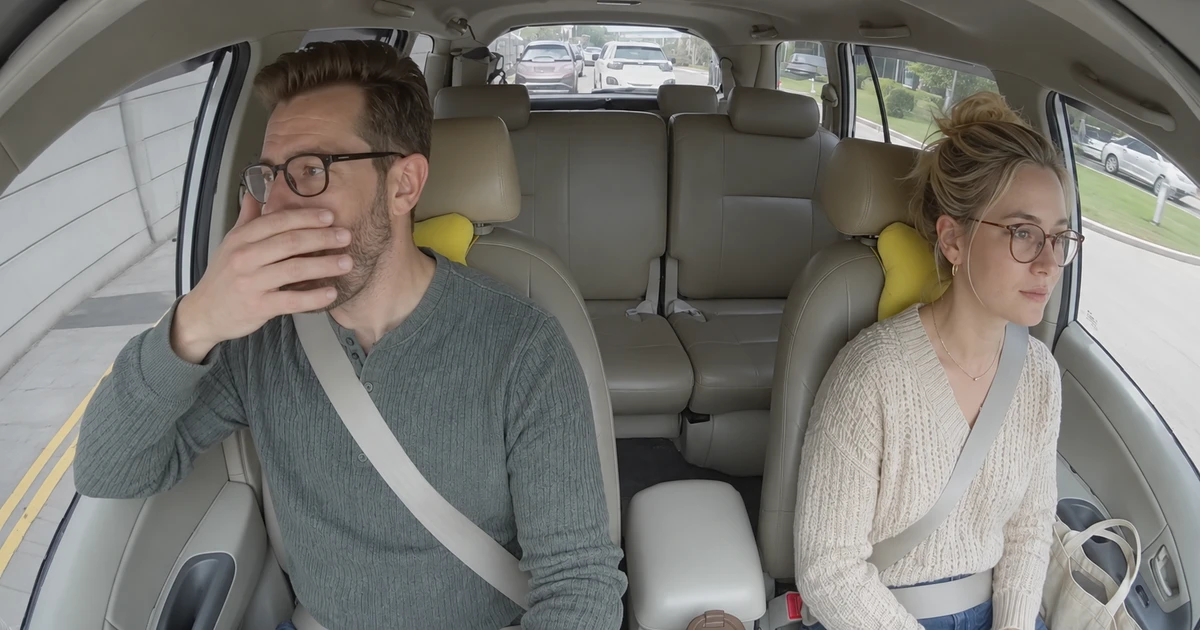
Waymo’s November 5, 2026 winter preparedness note describes testing, simulation and service adjustments for severe road weather, including black ice and whiteout conditions. It concerns external-road autonomy. The following cabin-monitoring examples are engineering proposals, not a claim of safety certification.
Describe conditions beyond the season label
Separate environmental conditions, image quality and task observability. Snow outside does not establish a cabin camera failure. A hat brim may hide the eyes without blocking enough of the head to prevent pose estimation.
Define indeterminate by task
Specify what evidence a task needs, what triggers an unknown label, and its time and region. Keep blur and occlusion separate from the inferred action. An unobservable eye state does not mean closed eyes or fatigue. System alerts and fallback decisions are separate requirements.
Work through a hypothetical hat-brim clip
A driver looks forward, lowers their head until the brim blocks the eyes, then raises it again. Mark clear, partial, indeterminate and restored visibility on one timeline and head pose on another. Preserve disputed boundaries, clock units, frame mappings and rule versions. For multiple views, identify the synchronized view that supports each label.
Choose boundary slices before scoring
Group by eye visibility, pose, brim and camera, allowing intersections. Report independent sources, valid and indeterminate counts, and corresponding metrics. Adjacent clips from one person or recording do not constitute independent observations.
Use simulation to broaden the questions
Synthesized occlusion and pose combinations help test rules. Real footage on target equipment evaluates transfer. Check for altered actions, implausible occlusion and rendering shortcuts. Compare changes on a fixed independent test set and report difficult and routine slices separately.
Record scope and reassess changes
Deliver supported tasks, camera requirements, observable evidence, unknown rules, validated slices and gaps. Reassess after a camera move, lens change or label-rule revision and identify what evidence needs repeating.