
Published 2026-11-16 · VWU.AI
Urban Video AI: Preserving Evidence and Privacy in Event Datasets
Learn how video event annotations connect time intervals, observable evidence, unknown states and review records, with an in-cabin dataset acceptance example.
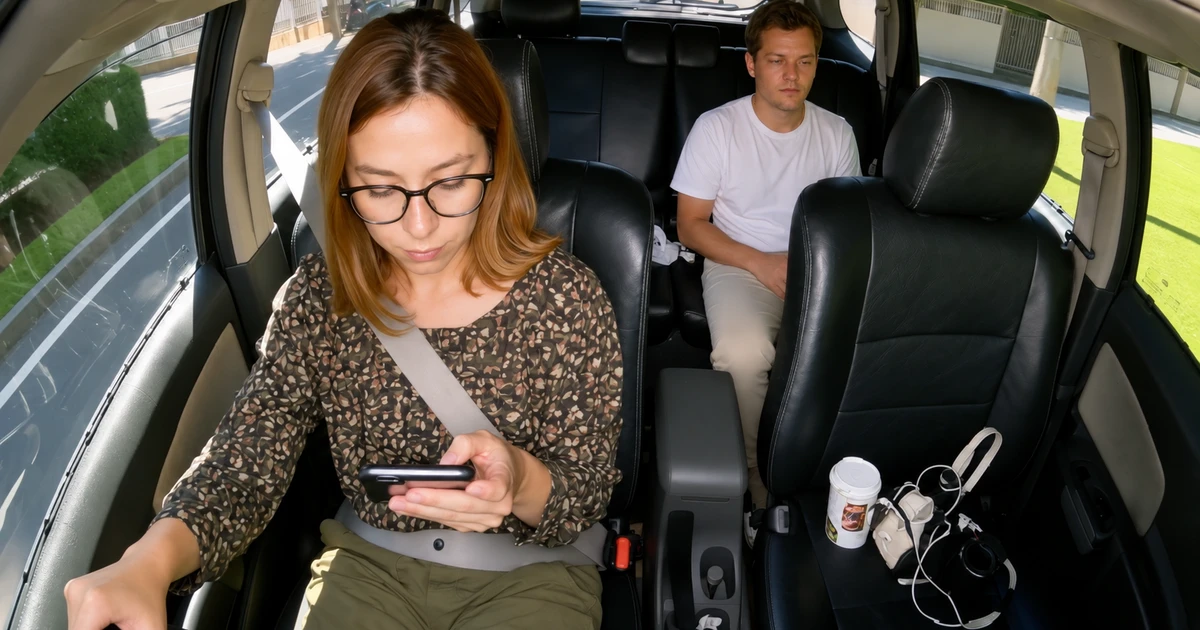
A video event dataset should let reviewers trace a label back to its footage and understand what that footage cannot establish. A finding such as “unusual behavior” needs a time interval, observable subjects, a behavior definition and an explanation of uncertainty. When footage contains personal information, its purpose and access should be limited. The following recommendations are for scoping and pilot acceptance.
1. What urban video AI brings into focus
On November 2, 2026, NVIDIA described city video analytics and service agents that use existing camera footage to support mobility, safety and incident response. The vendor report cannot establish independent evaluation results or in-cabin monitoring performance.
NVIDIA: Cities Worldwide Build and Scale AI Services With NVIDIA Physical and Agentic AI
Once an output shifts from “there is a vehicle in the frame” to “an event requires attention,” the label can shape downstream decisions. A summary on its own cannot tell a reviewer which frames support that conclusion or whether the system inferred something beyond what it could observe. Urban and cabin cameras need different behavior definitions, but both can document when an event occurred, what supports its label, and what evidence is missing.
2. Separate observations, rule outcomes and unknowns
A hand approaching the center console does not establish that someone adjusted the climate controls. A lowered head alone does not establish fatigue. When an object is occluded, allow an “object cannot be confirmed” state.
- Observable facts: record subject position, visible actions, objects and occlusion. Avoid attributing intent or emotion.
- Time evidence: record the clip ID, boundaries and keyframe references rather than just a whole-video label.
- Rule outcome: record the rule version and the conditions met.
- Uncertainty: distinguish blocked views, conflicting evidence and incomplete clips.
- Review history: keep the disputed point, decision and reason for any change.
Unknown describes the adequacy of the evidence. Model confidence scores describe a model’s assessment of its output. Store these separately. Before combining labels across views, check that the cameras actually capture the same time window.
In-cabin multi-camera synchronization and acceptance
3. What to deliver for a reaching event
Consider a hypothetical eight-second clip. A front-seat occupant’s arm starts moving at second two, the steering wheel hides the hand from seconds three to four, and the arm returns at second five. The motion and occlusion can be annotated, but the footage cannot establish whether an object was picked up. The example duration is illustrative.
Deliver one event record and its linked visibility interval. Include an anonymous clip ID, a within-clip track ID, event type, start and end times, rule version and review status. Record the occlusion interval and why the object could not be identified. A task-local track ID should not become a cross-camera or cross-session identity without assessing the need.
If the task requires a successful pickup, mark the example indeterminate or collect additional footage. Define the event boundary explicitly, such as initial arm movement, crossing a spatial boundary or first contact. Use the same version for training and testing.
In-cabin behavior annotation and temporal boundaries
4. Keep a traceable path from footage to summary
Link each summary to an event record and then to authorized clips and keyframes. Validate references on export so removed footage cannot silently leave a live training label behind. Separate original footage, annotation copies and deliverable clips. Give reviewers the minimum evidence access they need and let reporting staff work from aggregates. Scope anonymous identifiers and define when they expire.
Recheck task usability after blurring, masking or cropping. Blurring faces may remove gaze evidence, and cropping hands may make a pickup impossible to verify. Document conflicts between de-identification and the task before revising collection or authorization. Project owners and relevant compliance staff should determine permissions for collection, reuse and delivery.
5. Include ambiguous clips in pilot acceptance
Include occlusion, interrupted actions, clips starting mid-event and similar objects in the same frame. Set sample counts and acceptance criteria based on risk, budget and class distribution.
- Verify clip and frame references, versions and review access.
- Have reviewers independently relabel boundary cases before showing model answers.
- Check that unknown states reflect missing evidence and are preserved through export and training.
- Review event-level and clip-level performance separately. Neighboring windows may represent the same event.
- Rehearse one correction and deletion, checking that indexes and delivery manifests update.
Keep neighboring clips from the same person and continuous session out of opposite train and test splits.
Auditing leakage between driver-monitoring training and test sets
6. Define what the dataset is allowed to conclude
Specify the cameras and time ranges, whether outputs are visible actions, rule-based events or natural-language summaries, and what the system should return when evidence is insufficient. Then agree on coverage, annotation fields, access and acceptance. Retrieving clips of a hand approaching a console does not require inferring the driver's mental state. Establishing that an object was picked up requires footage where that outcome is observable.